Workflow Design
Organization-specific request, sourcing, approval, purchasing, receiving, asset and evidence flows.
 TICSCustom SolutionsDiscuss Requirements
Custom TICS Solutions
Some organizations will need more than standard configuration. TICS custom work can be scoped around specialized workflows, terminology, reporting, migration, integrations and operating controls — but only after the requirement is understood clearly enough to build the right thing.
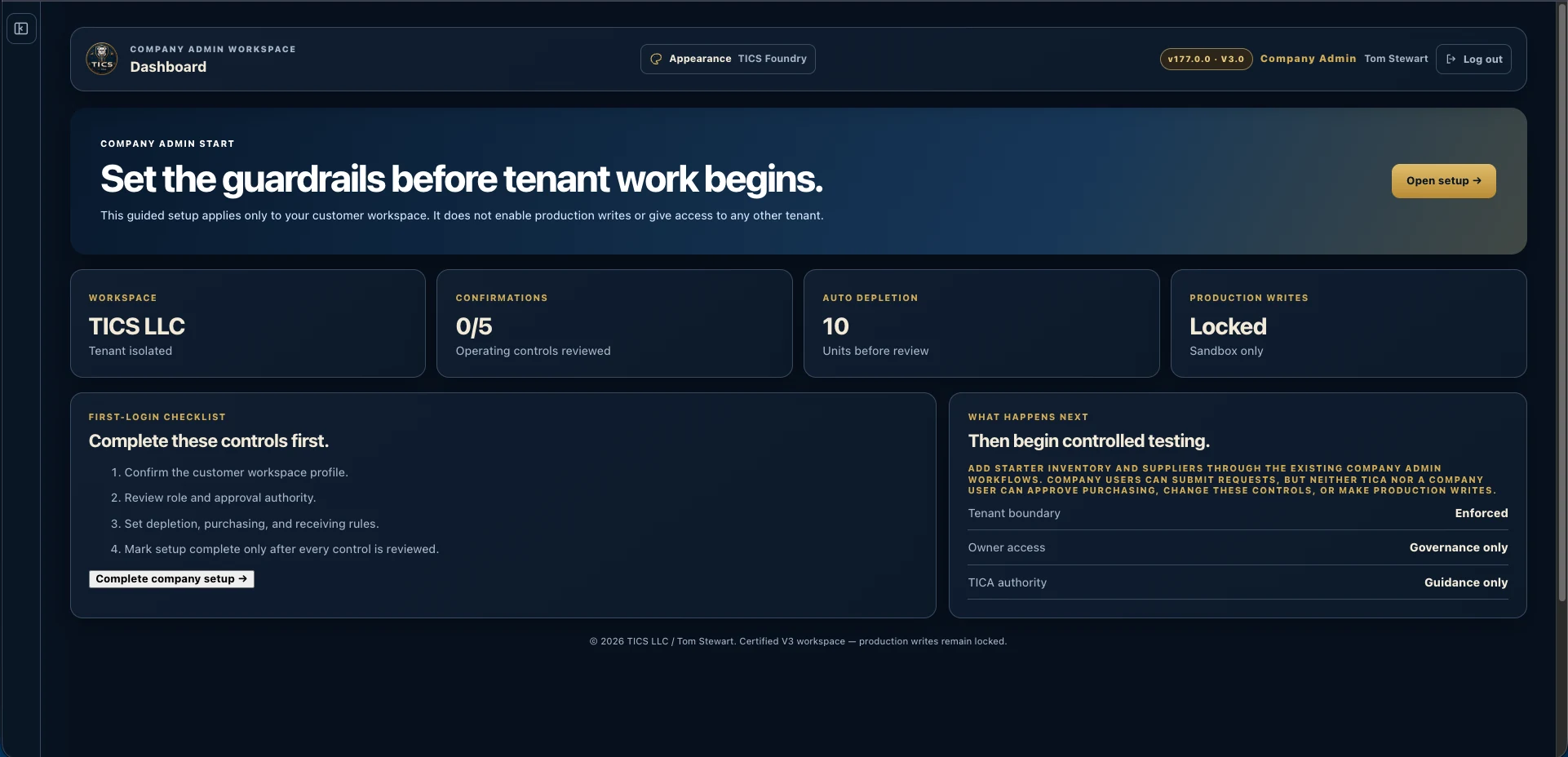 Current TICS V177 product surface shown as context. Custom capabilities are separately scoped and are not implied by this screenshot.
Organization-specific request, sourcing, approval, purchasing, receiving, asset and evidence flows.
Responsibility models, review gates, departments, sites and approval structures.
Structured transition from spreadsheets, item masters, vendor lists, asset registers and document libraries.
Operational dashboards, exceptions, audit outputs, management views and organization-specific KPIs.
Scoped connections to accounting, ERP, document, email or other operational systems where technically appropriate.
Industry and organization-specific labels, fields, classifications and operating language.
Intelligence behaviors can be explored around governed records, evidence and operational language as those capabilities mature.
Configuration, rollout planning, workflow validation and structured adoption support.
Understand the operational problem, users, systems, evidence and constraints.
Separate genuine requirements from habits, workarounds and unnecessary complexity.
Agree the intended workflow, deliverables, dependencies, validation and commercial terms.
Implement against explicit acceptance criteria rather than vague customization promises.
Custom automation should preserve explicit permissions, approval boundaries and accountable ownership.
Specialized workflows should retain the records needed to explain decisions and reconstruct outcomes.
Integrations and custom capabilities require technical validation before they are represented as delivered functionality.
Custom pricing
Custom pricing should depend on actual scope: workflows, users, locations, migration, integrations, reporting, implementation effort and support expectations. TICS should quote custom work only after those requirements are sufficiently understood.